Showing posts with label citrus trees. Show all posts

First Freeze

12/12/1
grapefruit tree
     We had three days in a row of below freezing temperatures this week for the first time this fall.  Last year the first freeze was in November.  I wrapped the orange, grapefruit and lime trees in sheets, and laid old sheets over the flower garden.

     Some plants did fine, others not so good.  I don't have enough old sheets and towels to cover everything that would benefit from covering.  I should invest in frost cloths, but I have such a large area to cover.  The citrus trees did fine.

frost damaged lantana
Some of the bougainvilleas do not look so good.  Last year most of the bougainvilleas were damaged, but I cut them back and all but three flowered again this year.  The leaves on some of the lantana turned brown and they will fall off.  When this happened last year, I lightly pruned them and almost all bloomed again this year.


     In the flower garden, some of the vinca and all of the cosmos are dead, but other plants did alright.  The blue maguerite is blooming away, as well as the gazania.

blue marguerite

gazania

The petunias are fine, and the pansies, of course, did not mind the cold weather.  The vegetable garden is done for the winter, except for the chard.  We had some with dinner yesterday.

rhubarb chard

Harvesting Citrus

11/28/11

harvesting an orange
     We returned from our Thanksgiving vacation to find our grapefruit and orange trees ready to pick.  At least it looked like it.  We have been watching the fruit on them becoming more orange in the last month.  I know gardeners in California have bee harvesting their citrus for a month now.  Here the ripening schedule for grapefruit is mid-October through June, and for oranges it is mid-November through April.


Arizona Sweet Orange tree
     I have never grown citrus because I have never lived in a citrus growing climate until now.  The oranges on our tree are called Arizona Sweet.  I don't know the variety of grapefruit other than it is pink.  Many of the orange trees used as ornamental plantings on highway and curb medians are the Seville Sour Orange, which grows well here but are so sour they are not edible.  Citrus trees are evergreen and retain the majority of their leaves year round.  They can produce fruit for over 50 years.  And I discovered my orange and grapefruit trees have thorns!  Evidently younger trees produce more thorns.  I have read that there are thornless varieties, but not in my yard.

     Citrus should be fertilized three times a year.  But I have read that citrus can go for years without fertilizer and do well if correctly watered (17 gallons per week in mid-summer and 3 gallons per week in mid-winter).  I fertilized three times this year in hopes that the trees would grow better and produce more.  Nitrogen is low in the soil here and is the main fertilizer element needed.  The grapefruit tree has done the best with 27 grapefruits on it.  The orange tree has 10 oranges, and the lime tree did not produce any fruit this year because it was damaged by frost. 


pink grapefruit tree
      The sun can burn the tree leaves and bark.  Temperatures above 110F (43 C) may damage bark on young and old trees, leading to fungal infections.  It is recommended any exposed bark be painted with white latex paint.  Most of the citrus trees in neighboring yards have their exposed bark painted, and my husband painted our citrus tree trunks.  Salt concentration in the soil can be a problem here and can be reduced by heavy irrigation.  Citrus trees have no significant pests in Arizona.

bark painted with white latex paint

     We gave our oranges and grapefruit a taste test.  They were edible but not as sweet as we would like them.  So we will give the fruit another week or two on the tree before harvesting more.

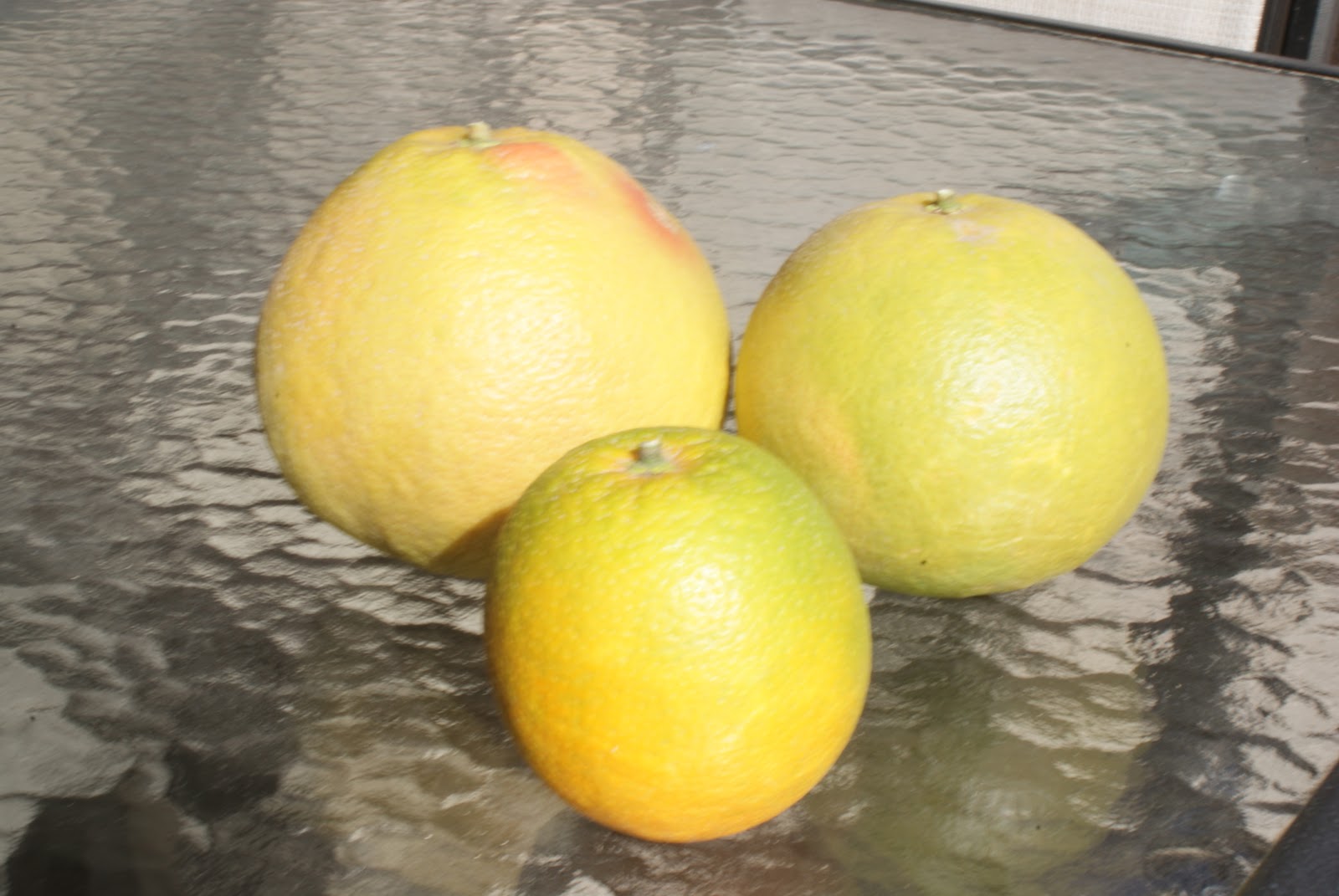
first harvest - two grapefruit and an orange

Backyard Path at Night

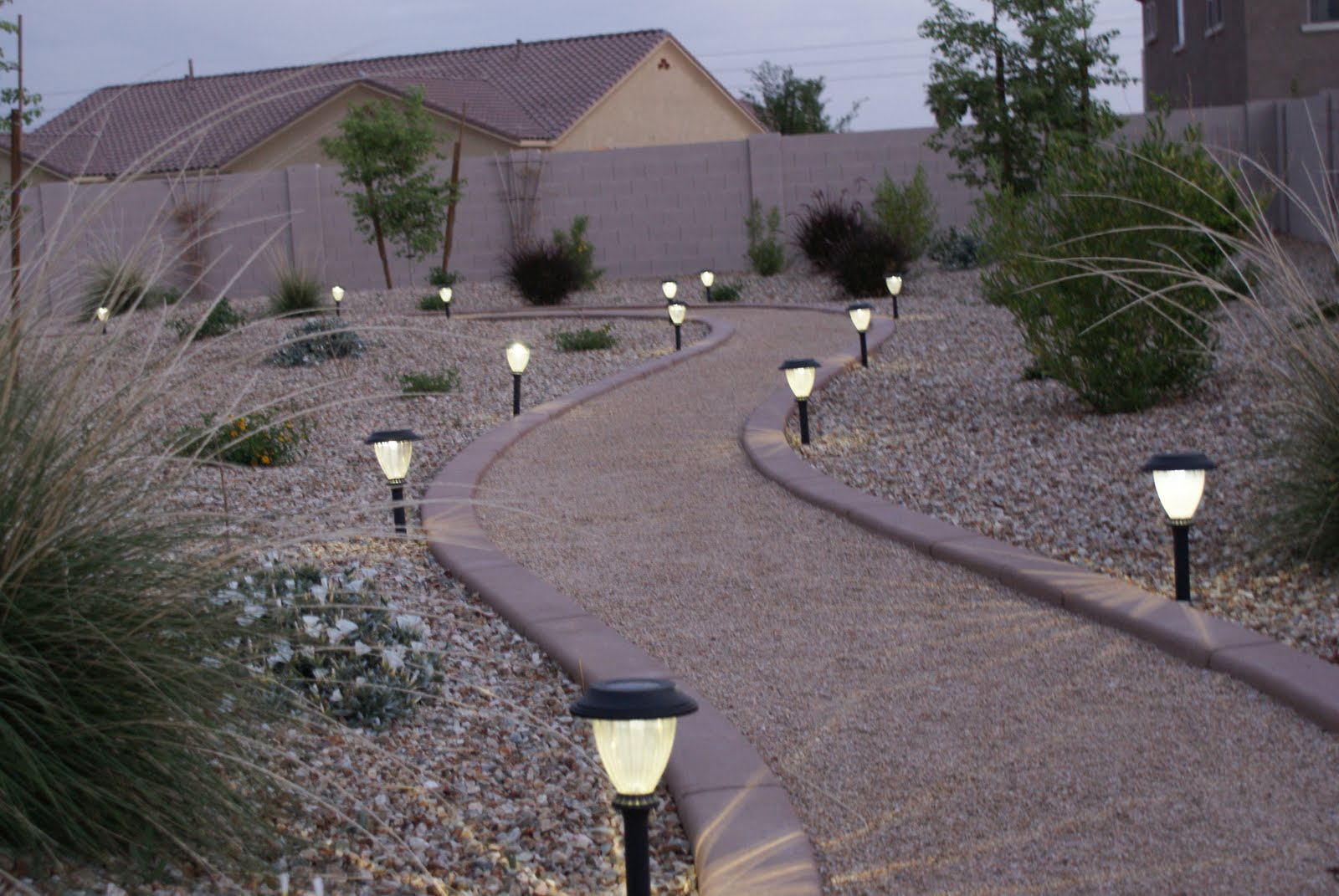
Backyard Path Solar Lights
4/12/11
     One of the most pleasing things we did in the backyard was to install solar lights along the path.  They give definition to the yard at night, and they beckon you to walk in the dark.  I was out walking the path a week or so ago when it was so warm.  It was completely dark, but I could smell the intoxicating fragrance of the orange blossoms on the Arizona Sweet orange tree before I came upon it.  What a delightful surprise that interrupted my thoughts!  The blossoms are all gone now, but were visited by numerous bees, so we'll see what comes of that.  This is the first time I have had citrus trees and some of the leaves are yellowing.  I'll have to look that up and see what they need.

Spring

flowering plum tree
3/1/11
     Ah, March 1.  Meteorological spring! The promise of more and more light every day and warmer temperatures.  I live for this time of the year .  It's finally warm today.  Can't quite thin my vegetable seedlings.  They are still too small.  I walked around the yard to check things out.  The purple flowering plum tree has blossoms, but nothing on the nectarine tree yet.  The orange and grapefruit trees are ok, but the lime tree is not looking good.  It has lost half its leaves from the 26 degree weather we had a few weeks ago.  I bundled it from top to bottom in old sheets and bungee cords.  But the wind was howling with 30 mph gusts.It tore the sheet open  and almost pulled them out from under the cords.  So I filled my jacket pocket with safety pins from my sewing box.  With frozen fingers I pinned the sheets from top to bottom and wrapped three bungee cords around each tree. I figured if that didn't hold, I didn't have another solution.  I'm sure professional growers have better solutions.  But I am an amateur, first-time citrus grower.  I barely got everything covered before nightfall.  But maybe that wasn't enough.